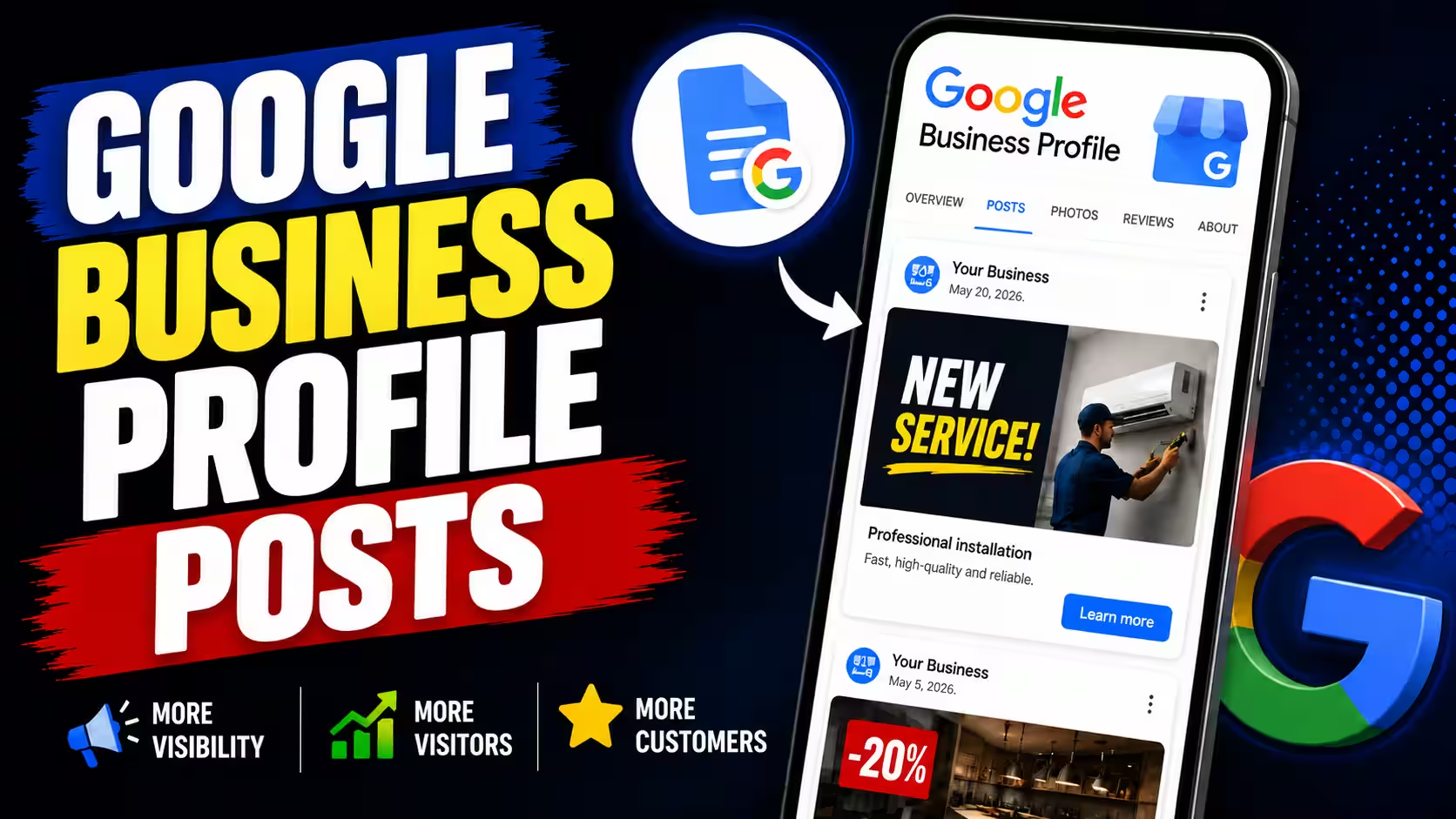
Do Google Business Profile Posts Affect Rankings?

Google Business Profile posts can be useful for your business, but not for the reasons often given in local SEO advice.
There is no confirmed evidence that posting regularly will, by itself, move your business to the top of Google Maps. Posts are not a replacement for accurate business information, reviews, or the other factors that influence local rankings.
Their real value is that you can share news, show completed work, introduce a service, or tell customers about a change that matters to them. When someone finds your profile, this information can help them decide whether to contact you.
That is why posts make sense when you have something specific to say. You do not need to create them just to make your profile look active.
If you have not checked the basic information on your profile yet, start with our guide to optimizing your Google Business Profile.
Do Google Business Profile posts affect rankings?
Google identifies three main factors in local rankings: relevance, distance, and prominence. Distance depends on the searcher's location, while relevance and prominence are influenced by different aspects of your business information and online presence.
Google does not list posts as a separate factor in its official explanation of local rankings. There is therefore no sound basis for claiming that publishing once a week, sharing a photo of completed work, or regularly adding keywords to posts will directly improve your position.
That does not mean posts have no business value. They can provide additional information to people who are already looking at your profile. Someone searching for a plumber might discover that you offer a particular service, while someone considering a salon might learn about a new treatment or a current offer.
Use posts to help potential customers make a decision, not as a ranking trick.
You can read Google's official guide to local rankings.
Three types of posts and when to use them
Google Business Profile supports posts about updates, offers, and events. Not every piece of information belongs in the same format. Choose the type that fits what you want to communicate.
1. Updates and completed work
Use this type of post when you want to show what your business does or tell customers about something new.
For example, a plumber could share a photo of a newly installed water heater and briefly explain the work. An air conditioning service company could introduce a new service or explain when maintenance is recommended.
A good post gives the photo some context. A picture of completed work often says less than the same picture accompanied by two sentences explaining what the customer received.
2. Offers and seasonal services
Offers make sense when you genuinely have a discount, special price, or promotion that applies for a specific period.
For example, an air conditioning service company could promote seasonal maintenance before summer. A salon could announce a special price for a particular treatment during a defined period.
Explain what the offer includes, when it expires, and who it is intended for. If there is no actual benefit, do not invent a promotion just to have something new to publish.
3. Events and important announcements
This format is useful when something is happening at a particular time. It could be an open day, workshop, presentation, or event organized by your business.
Events may not be common for many local service businesses, and that is perfectly fine. You do not need to use this type of post if it is not relevant to your work.
Google's official guide to Business Profile posts explains the available formats and their settings.
What should a local service business post about?
You do not need to invent marketing campaigns. Useful material is often already part of your everyday work.
Here are a few examples:
- Plumber: A photo of a water heater replacement, with a short explanation of what was replaced and what homeowners should check.
- Electrician: A brief look at a completed job or an explanation of when electrical installations may need inspection.
- Hair salon: An introduction to a new service, a change in opening hours, or a genuine offer.
- Dental practice: An announcement about a new service or an answer to a common patient question, without revealing private information.
- Auto repair shop: Seasonal vehicle maintenance advice or an introduction to a service customers frequently request.
Notice that none of these posts needs to be a large advertisement with a bold headline and a sales pitch. Providing information that a potential customer can actually use is enough.
If you share photos of real work, choose clear and relevant images. Our guide to Google Business Profile photos covers this in more detail.
How often should you publish posts?
There is no official rule requiring you to publish once a week or every two weeks. Google does not specify a posting frequency as a requirement for better local rankings.
My practical advice is to publish when you have something new, useful, or relevant to a particular time of year. A business that regularly completes different jobs might have something worth sharing every week. A smaller business with fewer updates may find that one or two useful posts a month are enough.
You should not create unnecessary work for yourself. If posting becomes a chore and you have nothing new to say, there is no need to invent content.
A simple test is to ask yourself: Would this information help someone who is considering my business right now?
If the answer is yes, the post probably has a purpose. If it simply repeats something you have already published, it can probably wait.
What should you avoid posting?
A post does not need a perfect design, but it should be clear and relevant to your business.
Avoid:
- Copying the same text every week without adding anything new.
- Sharing photos unrelated to your business.
- Advertising discounts or offers that do not actually exist.
- Making exaggerated claims you cannot support.
- Filling the text with keywords instead of useful information.
Do not automatically copy every Facebook or Instagram post to Google without checking whether it fits the profile. Here, you are communicating with people who have already found your business or are comparing several options.
If a post contains an offer, make sure the price, conditions, and expiration date are clear. If it shows completed work, explain what you did instead of writing only "Another successful project completed."
Should you continue posting if you cannot see results?
Do not judge the value of posts solely by whether you notice a change in your Google Maps position. There is no confirmed evidence that regular posting alone will produce that change.
Instead, consider whether your posts provide information customers need and whether they lead to a useful next step, such as visiting a service page, booking an appointment, or sending an inquiry.
If you have access to suitable analytics, track website visits and inquiries that can reasonably be connected to your posts. Keep in mind that not every click comes from a post, and a change in the number of calls does not prove that posting caused it.
You do not have to abandon posts just because you cannot measure every result. They can still be a straightforward way to share updates and answer questions from potential customers. Just do not expect them to replace an accurate profile, good service, and the other foundations of your local online presence.
Publish when you have something useful to show
Google Business Profile posts are not a shortcut to the top of Google Maps. Their purpose is to give people additional information when they look at your profile.
Show completed work, share a genuine offer, or answer a question customers often ask. You do not need to publish every Monday or prepare ten posts in advance just to make your profile look active.
If you have something useful to share, publish it. If you do not, spend your time on something more valuable to customers, such as accurate business details, good photos, useful website pages, and genuine reviews.